

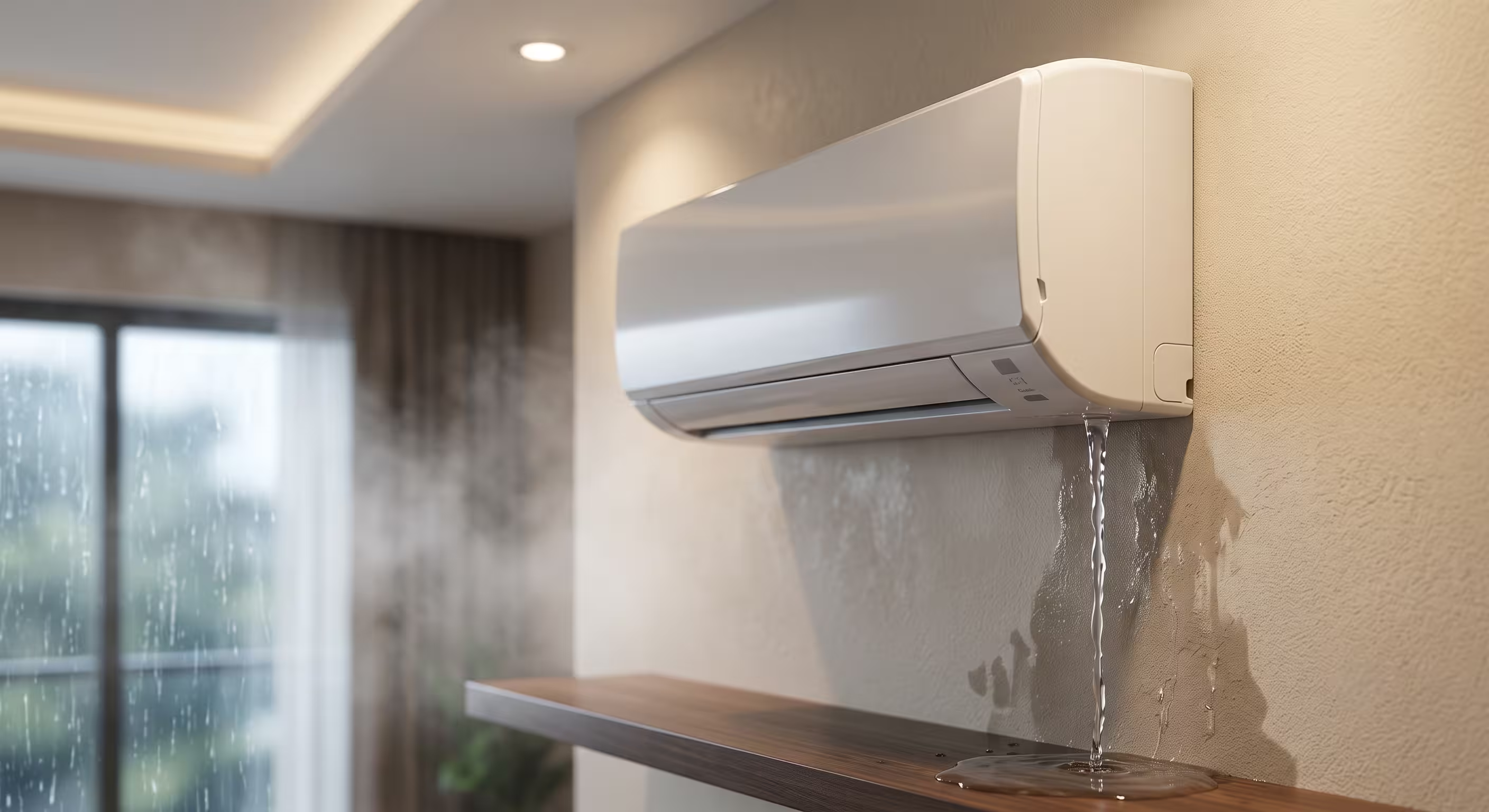
The Mumbai monsoon brings relief from the blistering summer heat, but for your air conditioner, the rainy season is the toughest time of the year. Whether you are a homeowner waking up to water dripping onto your furniture at 11:00 PM, or a facility manager at BKC terrified of a massive VRF system breakdown, monsoon AC issues are a universal headache.
Between the sudden voltage spikes, extreme coastal humidity, and continuous downpours, air conditioners are pushed to their absolute limits. If left unchecked, what seems like a minor drip can quickly escalate into ruined wall paint, severe mould growth, or a burnt-out Printed Circuit Board (PCB).
In this guide, we break down exactly why these issues happen, how to prevent them, and when to step away and call in the professionals.
1. The Classic Nightmare: AC Leaking Water Inside
This is the most frequent complaint we receive from homeowners in Thane, Andheri, and Navi Mumbai. You turn on your split AC, and within an hour, a steady stream of water is ruining your wallpaper and pooling on the floor.
During the monsoon, your AC extracts massive amounts of moisture from the humid air. This condensation drips into an internal drain pan and flows out through a PVC pipe. However, if that pipe is clogged with dust, algae, or debris accumulated over the summer, the water backs up. With nowhere else to go, it overflows directly inside your room.
The Fix: Never attempt to poke wires into the drain pipe yourself, as you might puncture the delicate internal coils. This requires a professional technician to use a high-pressure vacuum or nitrogen flush to clear the blockage. If you are facing this right now, book a swift AC repair near me to prevent further interior damage.
2. The Foul “Dirty Sock” Smell
Does your bedroom suddenly smell like damp, dirty socks when you turn on the AC? This is a severe red flag for your indoor air quality.
High humidity combined with the dark, cold environment inside your AC creates the perfect breeding ground for mould, mildew, and bacteria. These biological contaminants colonise the cooling coils and blower fan, blowing microscopic spores into your breathing air. For families with children, this can trigger severe asthma and allergies.
The Fix: A standard “filter wash” under the bathroom tap won’t solve this. The system requires a deep chemical wash (often called a jet service) to completely eradicate the bacterial buildup from the evaporator coils.
3. Frequent Compressor Tripping and PCB Failures
For business owners and facility managers managing heavy-duty commercial units, this is the most expensive monsoon threat. The rainy season in Maharashtra is notorious for lightning strikes and erratic power grid fluctuations.
Modern Inverter ACs rely on highly sensitive electronic motherboards (PCBs) to regulate voltage and compressor speed. A sudden power surge can instantly fry these components, causing the compressor to trip repeatedly or fail entirely. Replacing a burnt-out PCB or compressor can cost thousands of rupees.
The Fix: Ensure your commercial systems are protected by robust voltage stabilisers and proper grounding. For residential complexes and offices, relying on reactive repairs is a massive operational risk. Securing an Annual Maintenance Contract (AMC) ensures proactive auditing of electrical terminals before the monsoon hits, protecting your capital investment.
4. Poor Cooling and High Humidity (The “Sticky” Feeling)
If you recently purchased a brand-new Inverter AC, you might notice that despite setting the thermostat to 18°C, the room feels cold but uncomfortably damp and sticky.
This happens because the AC is battling latent heat (the moisture in the air) rather than sensible heat (the actual temperature). The machine is working overtime just to pull water out of the air, severely compromising its cooling efficiency and driving up your electricity bills.
The Fix: This is exactly why your remote has a “Dry Mode” (usually indicated by a water drop icon). Dry mode slows down the fan speed, allowing the air to sit on the cold coils longer, which extracts maximum moisture without overcooling the room.
Key insight: Using Dry Mode during the Mumbai monsoon not only makes the room feel drastically more comfortable, but it also reduces the load on your compressor, saving you significant money on your electricity bill.
Tonnage vs. Dehumidification Reality Check
Many users believe a larger AC will solve monsoon humidity. This is a costly misconception.
| AC Sizing | Cooling Speed | Dehumidification Capability | Monsoon Verdict |
|---|---|---|---|
| Correctly Sized (e.g., 1.5 Ton for 150 sq ft) | Gradual and consistent | Excellent (runs long enough to extract moisture) | Ideal for high humidity |
| Oversized (e.g., 2.0 Ton for 150 sq ft) | Extremely fast | Very Poor (shuts off before extracting moisture) | Leaves room feeling cold but damp |
Don’t Let the Rains Ruin Your Comfort
Whether it’s a dripping split AC in your living room or a massive VRF system serving a commercial office in Lower Parel, monsoon AC problems require immediate, expert intervention. Delaying service only leads to compounded damage.
If your system is acting up, don’t risk DIY hacks. Trust Mumbai’s seasoned experts for reliable air conditioning repair and maintenance to restore your comfort safely and professionally.